Audio link above is provided to listen to Ep12: Beth Quaas, DNP, CRNA, APRN And Nursing and the Arts Podcast Host Susan J. Farese, MSN, RN.
Nursing and the Arts is a podcast devoted to Nurses discussing their diverse artistic passions (or endeavors) such as visual arts/photography, journaling, comedy, podcasting, storytelling, writing/poetry, crafting, cooking, dance, theatre, music, film etc.
Welcome to our 2nd Season!
Join us on today’s 12th episode of the Nursing and the ArtsPodcast for an informative and entertaining discussion with our guest Ep12: – Beth Quaas, DNP, CRNA, APRN, An Inspiring, Empathetic Nurse Anesthetist and Host of the “Don’t Eat Your Young” Podcast – And – Susan J. Farese, MSN, RN, Host of the Nursing and the Arts Podcast
Watch the Nursing and the Arts Podcast (above)!
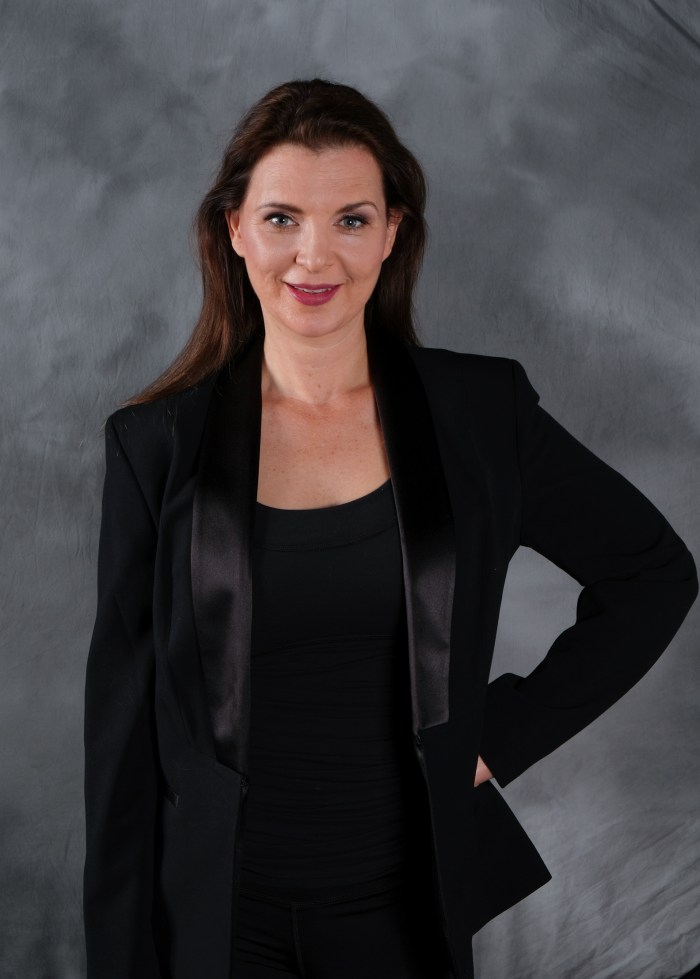
Ep12: Beth Quaas, DNP, CRNA, APRN, An Inspiring, Empathetic Nurse Anesthetist and Host of the “Don’t Eat Your Young” Podcast and Host Susan J. Farese, MSN, RN (right)
Show Notes
Meet the amazing Beth Quaas! It was delightful to virtually meet Beth when I was interviewed on her Podcast “Don’t Eat Your Young” in 2022. She is truly a compassionate and advocate for nursing in the best way!
Here are some tidbits from our wonderful conversation!
Beth has been a nurse since the 1990’s, starting with her LPN (in a nursing home), then her Associate Degree, followed by pursuing her Bachelor’s, Masters degree (1999 and CRNA) and Doctorate of Nursing Practice (DNP) in 2010.
Her clinical experience included ICU and the Operating Room before pursuing Nurse Anesthesia School, obtaining her Masters and CRNA and ultimately received her DNP. For the past five years, Beth has been the Associate Director of the Minneapolis School of Anesthesia. She also continues clinically as a Nurse Anesthetist in the O.R. as well.
She truly exudes joy in the nursing profession.
As a former Director of a CRNA group, realizing that the lack of training for and support in leadership was challenging and difficult, Beth experienced burnout. Now, she helps other nurses deal with and tell their own stories about bullying, burnout, workplace violence and more through her podcast “Don’t Eat Your Young”, (with success in it’s fifth season)! Her intention is to let nurses that are struggling know that they are not alone and that her podcast “Don’t Eat Your Young”, supports and provides resources for them.
Way to go Beth!
Each podcast guest on the “Don’t Eat Your Young” Podcast tells their own story.
Beth believes that Nurses need to discover a creative or artistic outlet and use creative ways to reduce stress, anxiety or burnout, whether at the bedside or not. We also discussed workplace safety.
Since she didn’t feel as though she was savvy with technology, Beth has the support of an incredible assistant for her podcast website, branding and social media.
For fun, (and for escape) Beth loves to read, especially Historical Fiction and SciFi. Appealing Book covers “speak to her”!
As for her views on the Art of Nursing as well as what she teaches her nurse anesthesia students-Beth described that anesthesia is like flying a plane, where there’s a take-off, then flying and finally a landing. There’s an art to making sure that patients are safe and comfortable and wake up in a timely manner with fine tuned medications and a smooth transition from the operating room.
Regarding her podcast title “Don’t Eat Your Young” , Beth emphasized that “young” is not chronological age, but “where you’re at”. Nursing students have knowledge and can teach experienced Nurses as well.
Another takeaway from our conversation is to have confidence in your role, whether it be as a Nurse Nurse Anesthetist or Nurse Practitioner – this confidence puts patients at ease.
Thank you so much Beth, you are truly an inspiration in Nursing!
About Susan J. Farese, SJF Communications
Susan J. Farese, MSN, RN, a native of New Jersey, is the owner/ president of SJF Communications, San Diego, CA.
SJF Communications, originally established in 2002 in San Jose, CA, provides communications services including Public Relations, Publicity, Virtual Assisting, Marketing, Websites, Film Making, Acting, Social Media, Writing and Public Speaking, Photography, Mentoring, Coaching and Legal Nurse Consulting services.
Ms. Farese has diversified experience in health care/communications, including clinical nursing practice, management, education/training, research and consulting.
If you are a nurse (or know of a nurse) who would like to be considered for a “Nursing and the Arts” Podcast interview, please reach out to Susan by email: info@sjfcommunications.com.
Thanks for visiting! Please feel free to Share this:
Susan J. Farese of SJF Communications taught her 2 hour “Capturing Your Creativity with Haiku” workshop at the Escondido Library on November 2, 2024.
Many thanks to Branch Manager Berlyne Arteaga for hosting/coordinating the November 2, 2024 workshop and for her photos of the group.
Thanks as always to all of the participants for attending, interacting and sharing their work!
Left to right: Phyllis, Susan, Lollie, Jan and June
Photos by Berlyne Arteaga and Susan J. Farese; Collage by SJF Communications
We began with an interactive fun ice breaker – getting to know each other.
After introductions and a review of her published work, Susan taught her Power Point presentation about writing Haiku and shared her nature photography as prompts to encourage Haiku writing. We all practiced writing Haiku and had the opportunity to share our work. As always, it was a great discussion and we equally had so much to say about the creative process and the parallels with Haiku poetry and visual arts.
Enjoy these Haiku from our Workshop….
“Capturing Your Creativity with Haiku” Workshop
Potrero Library 11/2/2024~
Hummingbird – Photo by Susan J. Farese
Jet roars past my nose
Wings blurring beyond man’s sight
Hummingbird visit
by Jan
Carlsbad Flower Fields – Photo by Susan J. Farese
Rainbow colors bloom
Mother Earth’s message to all
Spring is here again
by Jan
Coyote Chorus
Many voices sing off-key
Winters chill soft breath
~
Morning light fades dark
Cocooned warmth – feel hot breath
Open eyes – dog nose!
~
Innocence tumbles
Heart bleeds love lost in one blow
Domestic Abuse
by Jan
Winter
The coldest season
Animals hibernating
Snow on mountain tops
by June
People
People are funny
People run, walk, laugh, cry, talk
Also fat, skinny
by Phyllis
For more information or to book a workshop (Individual or Group) with Susan: Information LINK: https://sjfcommunications.com/haiku-workshops/ Or, Email info@sjfcommunications.com or sjfcommunications@gmail.com.
Thanks for visiting! Please feel free to Share this:
Susan J. Farese and Jeff Zevely; Photo by Scott Hall
It’s not every day that you (or your book) are featured in a segment with Jeff Zevely of the Zevely Zone on CBS 8 and the CW San Diego (KFMB)!
That’s right! Many thanks to Feature Reporter Jeff Zevely and Photojournalist Scott Hall. Jeff interviewed me about “Poetic Expressions in Nursing: Sharing the Caring” (and the hour flew by)!
We discussed my time (eons ago) as a military nurse, glimpsed at several of my ‘vintage’ photos and I had a chance to read some of my poetry from the book.
Here is the clip:
To purchase Poetic Expressions in Nursing: Sharing the Caring as an eBook, paperback or Audiobook, here are the links:
SJF: Why/How did you decide to write Journeys with Jimmy Carter and Other Adventures in Media?
BJ: People kept asking me, after I mentioned that I was retired, “what do you do or what did you?” I always answered, “I’m a writer”. Many would follow with “What have you written?”
I had been toying with a few paragraphs, so then I started saying, “I’m semi-retired, working on a memoir.”
Here is an example of letting imagination be partly driven by external forces. These fans of Jimmy Carter and Walter Cronkite, though dying off, provided a platform for my story. I didn’t mean to be at the center of American political and cultural life but a journalist can have that serendipity.
If you have modern information technology and talented colleagues, a first draft of your story can be whipped up in about two years including finding a solid publisher with a stable of intelligent editors and designers. Subsequent drafts will benefit from trusted advance readers, including some who think the completed final first draft needs more substance, except for the brilliant energy-oriented lawyer who noted a lack of rigor—He said the book could be divided into three parts: an analysis of the Carter Presidency, a study of modern telecommunications policy & the Presidency and my friends and others I had encountered. Though not denying my right to name names, he was quite obviously miffed at being left out. Go back to the drawing board!, he counseled.
SJF: Did you make any personal discoveries (or aha! moments) while writing your memoir? If so, please explain.
BJ: While writing, the concept of “flow” seemed to kick in as I was very comfortable remembering earlier life-episodes. In fact, one post-publication reader asked if I had used a “diary” with notes because details seemed to flow as I wrote. This discovery of useful memory was a pleasant surprise.
SJF: How did you decide on the title and decide to find a publishing company vs. self-publishing??
BJ: As loyal readers will attest, here is the book and I take full responsibility for factual errors. The solid publisher, John Koehler, wanted to use the Carter cover in part for marketing. I had no better idea.
SJF: Tell us about your background in the media and in politics
BJ: After graduate school (M.S., Journalism, Graduate School, Columbia University), I was hired as an Intern/Writer at NBC News and after a few months in the Newsroom at NYC Headquarters was assigned as Writer/Editor in Washington, DC. Their top stars, such as David Brinkley and Nancy Dickerson would present their copy for radio news (“hourlies) and television inserts. Left their own styles but occasionally did find factual errors which they were always glad to correct. During this period was often assigned as field producer at Capitol Hill gallery and back-up at other news making locations in DC. After accepting an overnight assignment monitoring audio feeds from NASA early Apollo Program came to attention of CBS news team covering moon landing effort and was hired as Associate Producer there. Subsequently became Producer (for Walter Cronkite) in coverage of Apollo 11. After ten years in broadcast journalism was asked by Jimmy Carter to help as Television Advisor in his nascent presidential campaign.
Barry Jagoda with President Jimmy Carter in the Oval Office – Courtesy Photo – Barry Jagoda
SJF: Tell us about your role in politics as Presidential media advisor
BJ: Carter wanted help understanding role of TV in presidential nominating politics and general election, though he was not interested in someone who would change his style and manner of presentation. After I said I would only advise him of effect of his words on news coverage, by networks and major print publications, he said I could be helpful and told senior media advisor, Jody Powell, to invite me aboard the campaign. After the successful election of 1976 I was named Special Assistant to the President, serving in the White House focusing on media and cultural relations. Eventually I had a philosophical difference with top campaign advisors (including powerful candidate spouse, Rosalynn Carter) who thought my work was giving Carter “overexposure” instead of focusing on a few cardinal issues. Moving to the National Security Council, I served there for seven months, but did not participate in Carter’s 1980 unsuccessful re-election campaign.
SJF: Tell us about your upbringing, geographically, personally etc.
BJ: My parents, both immigrants from Eastern Europe (part of the massive inflow between 1880 and 1920) were hard working and successful. Mother, who spoke no English upon arrival in USA from Ukraine, quickly mastered elementary and secondary education and went on to receive a medical degree (pediatric chiropody) from Case/Western Reserve University. Father, a serial entrepreneur, had a grocery business in affluent part of otherwise industrial Youngstown, Ohio. After being forced to move to warmer climes (first Phoenix, then Houston) he started small markets catering to shift workers from emerging petrochemical plants. They settled in post-WWII GI bungalows near stores. Eventually parents moved to districts of Houston where schooling was an improvement. This had a profound effect on me, as I moved forward with classmates in journalism and debate at one of Houston’s top high schools, Bellaire. For college, though accepted at some top private universities, enrolled at cost-effective University of Texas.
Karen and Barry Jagoda – Courtesy Photo
SJF: If you had to write the book over again, would you change anything?
BJ: A re-written book might include more information on differences between legitimate media and fake expressions, particularly in an election year. Thus, I would try to provide more analysis of difference between legitimate media and fake social media, especially from my experience and perspective from years of work in journalism and, more recently, in use of legitimate social media.
SJF: A brief history of your education, media and political positions/teaching appointments published articles, etc.
BJ: After graduate school, I was hired by NBC News, then CBS News to cover science and politics of moon landing. This evolved into coverage of the Watergate scandals for which I shared in an Emmy Award.
SJF: What are your personal pastimes/hobbies/interests/passions?
BJ: When I have a chance to relax, I enjoy the sports of golf and squash racquets.
SJF: Anything you’d like to mention about Watergate? Kennedy in Texas? Apollo? Emmy award?
BJ: From my memoir one can see a photo of the Emmy Award, press credentials for President Kennedy’s fatal trip to Texas in 1963 and photos signed by Apollo astronauts reflecting on my coverage of those events.
SJF: Where can we find you on the web? Website, social media etc.
BJ: I maintain a website (BarryJagoda.com) where those photos are easily accessible. Less useful for my expression is the Twitter account and the Linked-In that are available in my name. The best way I communicate with others is through email, where I am readily available via <Barry@barryjagoda.com>.
SJF: Any recommendations for us to journal or document what we are going through with Covid-19 coronavirus pandemic? Stress management tools?
BJ: When I anticipate a sense of stress or anxiety upcoming (mainly due to the Covid-19 Pandemic) I find “breathing exercise” to be a regular source of relief.
SJF: How has the Covid-19 affected you personally/professionally?
BJ: The Pandemic has forced me to be very careful about meeting with or encountering others without following the recommended tools of mask wearing, social distancing and trying to stay at home as much as possible.
SJF: Role models or persons that inspire you in your life?
BJ: I am reminded about these safety measures—and other common-sense applications—by my spouse, Karen Jagoda, who is a role model and an inspiration.
SJF: Favorite quotes?
BJ: At some point I favored the expression “practice makes perfect,” but in maturity I have chosen a variation, “practice makes improvement.” A short way of pointing to the inspiration I’ve had from Karen is by attention to the words in dedication to her of this book: “If you want to go quickly, go alone. If you want to go far, go together.”
SJF: Who would you like to have lunch or dinner with to discuss your book?
BJ: In addition to a long lunch to discuss the memoir with President and Mrs. Carter, it would be useful to compare notes with Professor Douglas Brinkley and other scholars who have given serious thought to their lives, including accomplishments and shortcomings.
SJF: Life hurdles? Successes?
BJ: After formal education I realized my shortcomings in mathematics and computational sciences, but was gratified to have gained skills in public speaking and general social interaction.
SJF: Three significant/pivotal moments in your life?
BJ: My parents favored extreme “left-wing” social change and when I realized that often brought more trouble than success, I became more moderate in political opinion. After choosing journalism as a career approach I left behind advocacy but later, pivotally, realized one could combine fact seeking with moderate political expression.
SJF: Fears?
BJ: I fear unchecked governmental power and, simultaneously I worry about a failure to use the levers of government to seek improvement in the general human condition.
SJF: Recurring dreams/ Usual dreams?
BJ: From time-to-time I worry about human catastrophes, such as earth quakes, and a general failure to act in ways that will modify the harmful effects of climate change. The weakness of humanity to observe and address problems sometimes leads me to have nightmares, mostly overcome in a startling awaking.
SJF: Strongest asset? What would you like to work on/improve?
BJ: I am a good listener but would like to improve on that trait. And, moving too fast—simulating the speed of light—makes one see less brightly!
SJF: Where/How do you ‘give back’ to your community/communities?
BJ: Though I try to see how I can give back to my fellows, and to the general community, this is an area that requires concentration and improvement.
SJF: Any regrets in life?
BJ: Being readily more selfless by focusing on helping my fellow man is a real shortcoming that, I try to remind myself, needs focus and hard work.
SJF: What qualities should the younger generations aspire to that you think are important in this day and age?
BJ: The younger generation seems even more self-oriented that my own group of “baby boomers” and pre-boomers.
SJF: Funny/humorous (appropriate) stories in media or politics?
BJ: The book, Presidential Campaigns, by Professor Paul F. Boller cites hundreds of laugh-filled moments in politics, including several where I am the butt of the situation. I heartily recommend this volume for many hours of humor.
SJF: How do you handle loss?
BJ: Loss is often the result of misfortune and, therefore, should not be taken personally, though this awareness may only mitigate the pain.
SJF: Where have you traveled and where would you like to travel once Covid-19 is OVER???
BJ: I have traveled the world as a journalist and political assistant, including having more than just a passing stop or two. Longer stays, of course, always been more informative and rewarding. These days, while desk bound by the Pandemic, I think of going back to some places I’ve enjoyed the most—particularly the Hawaiian Islands and the Adriatic coast and islands—but to more intriguing locations including Madagascar and New Zealand. Having the responsibility to share in the caring of a very active canine, a Mini Schnauzer named Timothy, is probably as much of a snag for travel as anything else.
SJF: What has been the most valuable lesson in your life?
BJ: The most valuable lesson I’ve had would be learning to appreciate the many qualities that others can bring when and where I frequently fall short.
SJF: Many thanks Barry, such a pleasure to learn more about you.
Book Details: Journeys With Jimmy Carter and Other Adventures in Media
The book is available at Amazon and wherever books are sold:
Here is a bit of information about both books (along with a holiday discount on eBooks for both) followed by our Q & A.
Crimes and Impunity in New Orleans is author Sherrie Miranda’s prequel to her page-turner, debut thriller, Secrets and Lies in El Salvador.
Shelly Dalton Smith is a naïve, twenty-three-year-old from Upstate New York who moves to New Orleans in 1980 to prepare for a photo project in war-torn El Salvador.
Shelly arrives in New Orleans, broken and traumatized and therefore unable to trust her own instincts. New Orleans represents the fresh start Shelly needs, but she soon finds that almost everyone in New Orleans harbors a secret. She’s unprepared for life in “The Big Easy,” and her world is turned upside down as she navigates “the city that care forgot.”
With fast-paced chapters and beautifully detailed conversations and descriptions, we see New Orleans through Shelly’s innocent eyes as she realizes the sheltered life she had lived was a lie. She experiences sexism and witnesses racism, police brutality, FBI visits, death threats, and two people’s captivity by her former boss.
Through her misadventures and exciting plot twists, Shelly focuses on fighting injustice, ultimately finding her authentic voice as an empowered adult. When she finally leaves New Orleans, she is forever changed. The novel is a wild ride through the underbelly of 1980s New Orleans and is filled with quirky characters, sinister abusers, and thrilling secrets and revelations.
Secrets and Lies in El Salvador(2015 sequel to Sherrie Miranda’s Crimes and Impunity in New Orleans) is the story of an American woman in war-torn El Salvador. It exposes death and destruction at every turn, but also validates the power of love, and embodies the gift of hope.
In a conscious effort to heal from recent trauma and her mother’s lies about her closest relations, Shelly Dalton Smith travels to war-torn El Salvador. Unwittingly used by someone she trusts to implement a mission too dangerous for anyone to complete, she captures shots of her host family, and listens to their secrets and lies, which reveal her mother’s deception is not so different from that of others, including her own.
Witnessing the death of an American journalist and listening to harrowing accounts of refugees who watched the massacre of their families, tears Shelly apart. So she turns to an American fighting with the guerrillas. He teaches her a passion for living she has never known. When he dies in combat, Shelly can no longer bear the pain, and wonders whether it is possible to accomplish her mission.
Sherrie Miranda and Susan J. Farese, SJF Communications
SJF: Why/How did you decide to write Crimes and Impunity in New Orleans?
SM: I always knew I wanted to write this story, but I also knew it would be difficult because I lived in NOLA for 7 years. I could not put everything I wanted in it, but I knew it was an important and timely story. So, I got the support I needed to help me figure out what the story would look like.
SJF: Did you make any personal discoveries (or aha! moments) while researching the book? If so, please explain.
SM: I didn’t really research except for a training on police forensics that I never actually used.
SJF: How did you decide on the title #CIINO and decide to self-publish??
SM: I decided the title early on to help me focus on that part of the story.
Self-publishing was the only option for me. I sent out about 35 queries for my debut novel and I got one response. I realized that even if I got an agent, that did not guarantee a publisher & I was noticing that people were waiting years to get published if ever.
SJF: Tell us about your background that led to you writing the book.
Sherrie Miranda. Photo credit: Tony Alcaraz
SM: Most of what happens in the story actually happened to me or to my friends. The book is about a time in this country and New Orleans, in particular, when we were trying to stop the slaughter of innocent people in El Salvador. But, our government had us labeled as the bad guys. They wanted to shut us up & shut us down. It is not unlike what’s been happening these last four years.
SJF: Did you take any writing classes or utilize other resources for writers?
SM:Marni Freedman was an amazing help to me. When I finally figured out she was local, I did a coaching session with her. I had been stuck for a long time, but she helped me figure out the shape of my story and what it needed to work. I took her memoir certification class and things finally started falling into place. I also got editing help from Tracy J Jones, Marni’s best friend and her editor and co-chair of her memoir course. Marni and Tracy are supportive in ways few instructors are. They are very careful not to break your spirit. They come from a place of pure love. If it weren’t for these two women, I believe I’d still be stuck!
SJF: Can you give us information on your background in teaching – Subjects? Creative writing/ESL etc.?
SM: Although I taught Art, Health, English Literature and even History, I loved teaching ESL. It was a privilege to have students from all over the world and to be their introduction to this country. I learned so much from these young people and they inspired me to tell my story.
SJF: Tell us about your upbringing, geographically, personally etc.
SM: I was born in Pennsylvania, in hunting & fishing territory. Fortunately my parents moved us to Upstate NY so I could start school there. The area I was from in PA was economically depressed & I am grateful we got out of there because it taught me to dare to go out in the world & try new things.
SJF: If you had to write the book(s) over again, would you change anything?
SM: No, I wouldn’t change much. It took me 5 years to write this 2nd novel & I got a lot of support & suggestions from fellow authors. The book is exactly what I want it to be.
SJF: If you had to interview your character Shelly in CIINO, what would you ask her?
SM: I would ask her: how did you change from before you went to New Orleans to when you left?
SJF: Please explain, in first person now, Sherrie…this is interesting!
SM: I didn’t realize how big an issue sexism is in this country & in the world. I didn’t know that 1 in 4 women get raped or molested in their lifetime. Also 1 in 5 males are raped or molested. New Orleans forced me to look at the hard reality – #MeToo
I didn’t know the depth of racism in this country. Nor did I realize how it permeates every part of the lives of people of color. Knowing the experiences of POC changed me forever. #BlackLivesMatter
SJF: A brief history of your education, positions/teaching appointments published articles, etc.
SM: I studied Art, then Photography at the Rochester Institute of Technology (RIT), but I was on academic probation, mainly because I kept asking professors to let me do a photo project, but being on a trimester schedule did not allow me the time to go back & finish another class when I had a full load each semester.
In New Orleans, I finally got back in school, but it took another four years to finish because my transfer courses did not count the full 3 units. Also, again, I studied Art, then pre-nursing, then finally switched to Drama & Communications.
I was a much better student at University of New Orleans (UNO) so I was able to pull my GPA up to a 3.4. I was friends with professors at UNO, whereas at RIT, the professors were not friendly toward me.
I also received my teaching credential through SDSU and my MFA in Creative Writing from National University (with a 4.0 GPA)!
SJF: What are your personal pastimes/hobbies/interests/passions?
SM: I love to garden. It’s kind of addicting. Sometimes I lose several hours when I get out there & play in the dirt. Also, we have a historical home, so we love to shop for art & furniture from the 1930s when our home was built.
I love movies and good TV shows, and reading, of course. I love a good story that is well developed.
I also love to travel. Angelo and I mostly travel in the U.S., but I’ve been to several European countries and a few Latin Countries. I hope to figure out how to incorporate those trips into my writing eventually.
SJF: Anything you would like to mention about Crimes and Impunity in New Orleans (#CIINO) and Secrets and Lies in El Salvador (#SLIES)?
SM: There are stories that come from my heart. The people of New Orleans are very unique and memorable. Salvadorans are the most generous people as a group that I’ve ever met despite decades of the government & landowners fighting its own people. Also, my husband wrote the music for the trailers. Angelo is a musician in two local bands:: Local Upfront, 70-80 cover songs, and the South Bay Band, a jam band.
SJF: Where can we find you on the web? Website, social media etc.
SJF: How have you been coping with life since Covid-19? Any stress management tools?
Sherrie Miranda and Angelo Miranda. Photo credit: SJF Communications
SM: Mostly, it’s been good for me. I had an excuse to stay home & finish CIINO. Angelo had a few outside music gigs so that helped ease the loneliness. Plus, I have a couple of friends who have been mostly isolated so we were able to do a few get togethers with them.
But, I have to admit it’s starting to get to me now. Plus, I’ve been staying up too late & sleeping late. If I ever get back to subbing, I’m going to be in trouble trying to get up at 6 a.m.
SJF: How has the Covid-19 affected you personally/professionally?
SM: I’ve come to realize that I’m an introvert so it’s been easier on me than most people. Also, since I haven’t been around a lot of people (esp. teens), I’ve managed to stay healthy for more than a year.
Professionally, though, I would have gone to the La Jolla Writer’s Conference & probably done some events at several bookstores so that’s been difficult. But people have more time to read so I’ve seen a lot more interest in this book because of having an online presence.
SJF: Role models or persons that inspire you in your life?
SM: First, my dad, was always an inspiration because he believed in me. The rest of my family doesn’t feel the same about him. I guess I was a Daddy’s girl like my mom always said.
There have been women who have inspired me most of my life. Some I knew, like my Spanish professor who is now writing books too. And some I didn’t know, like Susan Meiselas whose photography in Central America inspired me to be an anti-war activist, and Carolina Forché, who showed me the power of writer as witness to atrocities and injustice.
SJF: What are you working on next? Another sequel?
SM: Yes, When Shelly comes back from El Salvador with her husband (and pregnant)! She’s going to have a blond haired, blue-eyed baby that is obviously not Juan Jr.’s! I’m not really working on it right now. Just in my head. I need to work with Marni before I start writing. She believes in having a firm plan before starting to write. Otherwise you risk getting stuck in the middle & maybe never finishing. Since this happened to me both times, I’m going to follow her advice.
SJF: Favorite quotes?
SM: “I don’t like to write; I love having written.” Dorothy Parker
“You simply sit down to a typewriter, open your veins and bleed.” Ernest Hemingway
“The lesson will be repeated until it is learned.” Buddha
SJF: Who (celebrity) would you like to have lunch or dinner with to discuss your book?
SM: Martin Sheen. I sent him a copy of SLIES and he sent me a thank you card. I wish I had heard from him after he read it. I’m going to send CIINO to him too.
SJF: Life hurdles? Successes?
SM: I was always going two steps forward, one step back. I was a country girl trying to be a city girl. I was never prepared for what I was trying to do. In the end though, that has made me a better writer so it all happened for a reason.
SJF: Three significant/pivotal moments in your life?
Divorcing my first husband and starting college.
Traveling around Europe (several times)
Moving to LA – that was hard too, but I learned a lot there. It’s where I became spiritual, after 9/11.
SJF: Fears?
SM: Oh, I’m filled with fears. But I just decide to go ahead & try it anyway.
SJF: Recurring dreams/ Usual dreams?
SM: When I was a kid, I dreamed my family and I traveled to other planets. I often dream I’ve got an out of control classroom of students.
SJF: Strongest asset? What would you like to work on/improve?
SM: I think my openess has allowed me to have experiences that most Americans don’t ever get to have. I need to work on being fearless and I really need to stop procrastinating. I also need to stop spending so much time on the internet. It’s the worst addiction there is.
SJF: Where/How do you ‘give back’ to your community/communities?
SM: Teaching has been very rewarding in that respect. Before I became a teacher, I was an antiwar activist and I continue to try to raise awareness on political issues that are important to me.
I also worked with the homeless when I first moved to San Diego.
SJF: Any regrets in life?
SM: I don’t really believe in regrets. I never had a child, but I have had many loving people in my life. I believe “Everything happens for a reason.” If I had had a child, I wouldn’t have been able to travel and wouldn’t have ended up in a place where I could marry my husband.
I put myself through a lot of unnecessary difficulties with men mostly, but I finally know who I am and what I want so it all worked out in the end.
SJF: What qualities should the younger generations aspire to that you think are important in this day and age?
SM: Young people are more aware of the dire issues that face us. I trust that they will make the world a better place, a more fair & equal place.
SJF: Funny/humorous (appropriate) stories?
SM: Oh, when I went to RIT in my mid-twenties, I had a really hard time with this one professor’s class. When I asked him for help, he said I didn’t belong in his class. But when I tried to drop the class, he insisted I see the school psychologist first. The psychologist thought it was the professor who had a problem, not me. But, I just told the professor that yes, I had seen the psychologist. He finally signed off on me dropping his class.
SJF: How do you handle loss?
SM: Better than I thought I would. My mom’s death was heartbreaking. I felt I could have been a better daughter (though she insisted I was a perfect child!). I cried for weeks when she died. But I got messages from her.
My dad was the guy I worried about dying since I was 13 years old. I think I must have sensed that something was wrong. So many times I cried about him dying someday, but when the day finally came, I just felt relief that he was out of the miserable situation he ended up in.
SJF: Where have you traveled and where would you like to travel once Covid-19 is OVER???
SM: I’ve traveled a lot. First Europe, then El Salvador, Cuba, Brazil. Then West coast, including Canada & Mexico. Then East coast, including Montreal.
But I want to visit Pittsburgh and Philly and the New England states. I also want to see more of Europe, especially Ireland, Wales & Scotland.
I would travel more, but Angelo (my husband) doesn’t like to be away from his pianos.
SJF: Thank you very much Sherrie, and best wishes with your writing and looking forward to reading more of your upcoming books!
Patricia Geist-Martin, Ph.D., Bill Torres and Sarah Parsloe, Ph.D.
“WHY ME?” These were the first words that Bill Torres spoke after waking up from his stroke. Like many survivors, Bill lived his first days and weeks after stroke in a dark, heavy cloud of depression. Depression creates feelings of hopelessness, guilt, helplessness, and decreased energy—all symptoms that stand in the way of a survivor’s efforts to regain mobility and speech. Yet, rather than dwelling on asking “WHY ME?” Bill’s second words were, “WHAT NOW?” He set his mind to getting better, little by little, every day. As researcher and author, Peter Levine (2013) suggests, stroke survivors must “fall in love with the process … [and] see the process of recovery as an opportunity for growth.”
Falling in Love with the Process: Cultivating Resilience in Health Crises – A Stroke Survivor’s Storytells Bill Torres’ story of recovery and advocacy. The book is structured along two different timelines—the timeline of Bill’s early life and the timeline of his life from stroke onward. Chapters are alternated between Bill’s stories of growing up in San Diego and chapters that provide accounts of Bill’s journey of stroke recovery. These two separate storylines come together near the close of the book as we explore Bill’s approach to recovery and advocacy.
Part One:Picking Up the Pieces; Connecting the Dots explores the aftermath of Bill’s stroke and discusses the ways in which stigma, depression, and internalized ableism shaped Bill’s initially difficult emotional response to stroke. It also offers accounts of how his communication with key health care providers reinforced Bill’s drive to work on his own rehabilitation.
Part Two: Persisting Through Recovery considers both Bill’s capacity to structure his own rehabilitation routine and the ways in which his close network of friends supported him throughout his recovery process.
Part Three:Communicating as an Advocate explores how Bill transformed his survivor narrative into a tool for advocacy. It explains the strategies Bill used to successfully work with other stroke survivors and also describes the compassion fatigue that can accompany this kind of communicative labor.
Q & A with Patricia Geist-Martin, Ph.D. and Susan J. Farese, SJF Communications
Patricia Geist-Martin, Ph.D. & Susan J. Farese, SJF Communications
SJF: Why/How did you (and Sarah) decide to write a book about Bill Torres?
PGM: After being a guest speaker in my Health Communication class at SDSU over the past 10 years, Bill suggested that I should write a book. I resisted at first with so much on my plate, but then I thought of inviting Dr. Sarah Parsloe to co-author the book. We knew the book would touch on the disabilities that come with stroke and the advocacy work that Bill engages in, and Sarah has a great deal of expertise on both of these topics.
SJF: Did you make any personal discoveries (or aha moments) while interviewing Bill for the book? If so…please explain
PGM: We made so many discoveries—too many to list here—and of course that is really what the book is all about. First, resilience isn’t something we create from scratch at the moment we need it, it is something we develop over time beginning as a young person. So cultivating resilience as a young boy served Bill well at 69 when he had his stroke. Second, resilience isn’t something we cultivate alone. People who have a network of friends and family that they can count on when they need it most can join forces with them to create resilience. It isn’t about the number of people, it is about the quality of these relationships–having people in your life that you love and they love you and will be there for you when you need them. That’s just two of the many lessons.
He used the phrase in
the beginning of his book, stating that stroke survivors must “fall in love
with the process . . . [and] see the process of recovery as an opportunity for
growth” (p. xiv).
SJF: What made you decide on increasing the distribution of the book from academia to the masses?
PGM: Sarah and I are big believers in the power of stories. While we teach this in our college classes, we knew the general public would enjoy the stories told by Bill, his providers, and his friends. We also knew that the lessons about communication and resilience would be valuable for anyone, not just stroke survivors. Anyone who is moving through the grief of losing someone they love or recovering from an accident or any illness would find lessons in Bill’s stories that are universal.
SJF: Tell us about your passion and teaching emphasis with ‘storytelling’, especially as it pertains to health communication?
PGM: Storytelling is about connecting with other people. In telling our own stories, we put into words our joys, fears, and even our secrets. In the process of telling our story and being listened to, we can actually change the chemistry in our bodies—telling stories of pain and trauma or joy and passion can have an effect on the brain where dopamine, cortisol, oxytocin, and endorphins are released. In that release and in the chemical changes, we often feel pleasure—something that happens in hearing the story, not just the facts. I teach health communication from the point of view of stories—stories told to friends, family, providers, and even in health campaigns offer an opportunity to put into words, something that we are experiencing. As we tell stories to others, we begin to make sense of our own experience and when we listen to others tell their stories we offer them the same opportunity.
SJF: If you had to write the book over again, would you change anything?
PGM: I think the only thing I would add to the book if I were still in the process of writing it would be for Sarah and I to tell more of our own stories, especially as we feel that have evolved in the process of collaborating with Bill, his providers, and his friends. Our stories are partially there, but I think the experience of collaborating with Bill was life-changing in so many ways, but specifically reflecting on my own path and the resilience I feel I have created in difficult and dark times.
SJF: A brief history of your upbringing, education, professor positions/teaching appointments and early retirement at SDSU.
PGM: I am a first-generation college student. My dad graduated from high school and ended up as a pattern maker at John Deere Tractor Works. My mom did not graduate from high school and was a stay-at-home mom to four children. Both my parents really emphasized education and especially reading. I cannot think of one time in my life where I have not had one or more books on my night stand. My family moved around a lot-five states and seven houses by the time I was in second grade. I think my own resilience was built through that experience. I started out as a dance major at the University of Iowa in Iowa City but then switched to Literature and Writing when I discovered I wasn’t as skilled at learning and remembering choreography the way others were. My minor was Communication and I was hooked. I taught high school for two years—literature, writing, drama, and filmmaking. But then my thirst for knowledge about communication led me to gain a master’s degree in Communication at the University of Northern Iowa in Cedar Falls Iowa and a Ph.D. in Communication from Purdue University in West Lafayette, IN. My first position as an Assistant Professor was at the University of Hartford in West Hartford, CT, then the Department of Speech at the University of Hawaii, Manoa in Honolulu, HI. Finally, in 1990 I was hired by the School of Communication at San Diego State University. I feel blessed to have lived and worked in all three universities and to have attended strong programs for my education. I am now in my second year of a five-year early retirement program where I teach three classes only in the fall and have the spring and summer off to do whatever I want. And my joy is writing, so I will keep doing that as long as I can!
SJF: Tell us about all of the books you’ve written:
I have also published
over 100 journal articles and book chapters.
SJF: Anything you’d like to mention about your upcoming book The Infinite Now?
PGM: I have been working on a memoir for over 15 years. The tentative title is The Infinite Now: A Mother’s Past, A Daughter’s Future. My mom died of brain cancer when I was 17, right before Christmas in my senior year in high school. The only way I could cope with this huge loss in my life was to press down any memories of my mom. This turned out to be the worst strategy, because the pain was still there under the surface. It wasn’t until our only child, Makenna moved into her teen years that suddenly the past came rushing forward with each and every interaction—so it’s my mom’s past and my future woven with my past and my daughter’s future that form a braid of our two overlapping stories. It is a labor of love that is both traumatic and joyful. I hope to publish the book by summer 2021.
SJF: Any recommendations for us to journal or document what we are going through with Covid-19 coronavirus pandemic?
PGM: Yes, this crisis calls on all of us to become resilient. Resilience requires us to be flexible and adapt to each new phase of the pandemic. Resilience also offers an opportunity to be creative and come up with new solutions to this experience of isolation. Facebook, Instagram, Nextdoor, Zoom, and other social media offer opportunities to reach out to support one another and decrease our sense of isolation. One new solution that my husband and I have been engaging in is virtual happy hours. It is fascinating to realize that we our doing this more than we did when we had the opportunity (but supposedly not the time) to be connected with friends and family. We just don’t stay on the phone as long as we do when we are telling stories, playing games, and goofing around “face-to-face” on zoom. It’s fascinating to see some of the increased sharing and intimacy that is evolving on zoom with friends and family.
SJF: Is there anything else that you’d like to mention?
PGM: I love writing and teach it in most of my communication classes. I love helping people tap into the stories they feel they must tell—about life, love, travel, pain, trauma, joy—anything. So, in addition to the memoir, I have a few other books I plan to write, one about creative female leaders and another on the process of mentoring. I also plan to develop writing workshops in San Diego and in other cities, countries. My husband will be retiring about the same time that I am and we hope to build a business together that takes advantage of the expertise that each of us could contribute.
SJF: Thank you so much, Patricia – it was such a pleasure to learn more about you and you work!
Debra Wanger – The Resilient Actor – Photo Credit – Ken Jacques
(SAN DIEGO, September 23, 2019) – Actor, Author, Coach and Public Speaker, Debra Wanger is an often-sought-after professional actor, well known in the San Diego region. She published her debut book The Resilient Actor: How to Kick Ass In the Business Without It Kicking Your Ass in 2017 and is thrilled to announce the upcoming The Resilient Actor Audiobook and The Resilient Actor Workbook & Planner: How to Kick Ass in the Business Without It Kicking Your Ass.
“I’ve worked with Hollywood stars and actors currently working on Broadway. I have been able to utilize the secrets of their behind-the-scenes success along with my skills as a wellness coach and my own personal experience. I’ve worked mostly in live regional theatre, but also some television, film, and radio. When I left my BFA program and started working professionally, I had to learn the hard way all the life and balance skills they didn’t teach at the conservatory. There was a lot of focus on being a triple threat, on performance skills, but nothing about how to survive the challenging life of being an actor. I fought depression, loneliness, weight gain, difficulty navigating periods of unemployment, all of it. Like most actors, I had to learn how to get the rest & recovery I needed, how to master my mindset to work with me – not against me, and how to take care of myself like a performing athlete. I had to learn all these life skills beyond my BFA.” – Debra Wanger
Acting can be a crazy
profession, full of uncertainty, insecurity, and unpredictability. While there
are many books about technique, little has been written about how to pursue the
dream without compromising your health and sanity. Pulling from her decades of
experience as an actor, talent manager, and lifestyle coach, Debra Wanger
filled this void in 2016 with a must-read survival guide for the acting
professional.
Debra offers a positive, practical, playful, holistic approach to the art and business of acting that marries mind, body, spirit, and craft. In this essential handbook, which serves as a personal coach in a book, she covers all the bases–from exercise and nutrition to time management and setting goals to staying motivated from audition through performance. Her valuable, tried-and-true insights, gained from client successes, will enable the performing artist to balance and bolster a challenging creative career with a healthy, productive personal life.
At last there’s a clear
path through the madness. The Resilient Actor will lead you to the top
of your game, increase your professional staying power, and help you achieve
equilibrium in all aspects of your life.
ABOUT THE RESILIENT ACTOR’S WORKBOOK AND PLANNER:
Discover some of the secrets from Broadway & Hollywood to supercharge your career and balance your life. Debra Wanger knows how difficult it can be to pursue your dream of acting without compromising your health or your sanity. She drew wisdom from decades of working as an actor, talent manager, and wellness coach to write The Resilient Actor and give emerging and experienced actors a holistic approach to their profession that marries mind, body, spirit, and craft. Sustaining a healthy and satisfying career requires more than just talent- go beyond the skills you learned in your BFA program.
The Resilient Actor’s Workbook and Planner is filled with quick & easy exercises designed to help you plot the direction for your career from the start and avoid the pitfalls that many actors face. You’ll walk through the steps to figure out what kind of actor you want to be and the lifestyle you want to have. You’ll set goals and develop habits for your career and use the specially-designed included actors’ planner to create a step-by-step action and accountability plan for achieving them. The Resilient Actor’s Workbook and Planner will unlock longevity in your career by showing you how to find happiness and health in an industry that challenges both.
Debra Wanger – Photo Credit – Ken Jacques
BIO – DEBRA WANGER
Debra studied acting at
the nationally acclaimed Piven Theatre Workshop with such talents as John
Cusack, Joan Cusack, and Jeremy Piven. Her vocal training began at the
Northwestern University vocal department while still attending high school. She
declined an opera scholarship to Oberlin Conservatory in order to study musical
theatre at University of Cincinnati College-Conservatory of Music (CCM.) She
graduated Magna Cum Laude from Tufts University and received a Master of Fine
Arts in musical theatre from San Diego State University, where she graduated
Phi Kappa Phi as a Marion Ross Scholar.
Debra is currently in rehearsals as “Liz”- the younger version of Queen Elizabeth in Handbagged at Moxie Theatre which runs October 19th through November 17th. She has performed in regional theatres and cabaret clubs across the country, most frequently in Los Angeles, San Diego, Boston, and South Florida. In Professionally Speaking at the Off-Broadway, The Miami Herald hailed her “a comic spark plug.” Her role in Triumph of Love won a KPBS-TV Patté award. Her one-woman show My Nights With George, Kurt & Cole, (co-written and directed by comic genius, Phil Johnson) was featured at various venues throughout Southern California and won Best New Play and Best Actress at the 2003 San Diego Actors Festival, and the San Diego Playbill Billie Award for Best Actress in a musical.
She was just featured as
The Angel in Cygnet Theatre’s critically acclaimed production of Angels in America, as well as A
Little Night Music, On the 20th Century, Spring Awakening, My Fair Lady, Evita,
Sweeney Todd and Dogfight on
the Cygnet stage. At San Diego Musical Theatre has been featured in Hairspray,Billy Elliot, Footloose, Sound of Music, La Cage Aux Folles, and White
Christmas. Other San
Diego theatre highlights include: God of
Vengeance at La Jolla Playhouse, Hamlet (Gertrude)
at Intrepid; Titanic & Sunset Blvd. at Moonlight; Permanent Collection at Mo’olelo; Full Monty (Vicki) at New Village Arts; Sleeping Beauty at North Coast Rep; Anything Goes! (Reno), Oliver! (Nancy) at Lyric Opera San Diego; Carousel and Sound
of Music at Lawrence Welk.
Her CD, Driving My Own Heart is
also available on Amazon and iTunes.
BOOK REVIEWS:
“This book is fantastic.
I’m a professional actor and also teach acting, and will recommend it to all my
students. It’s a topic not discussed enough! Resilience is one of the most
important qualities for any working actor–if not THE most important quality.
Highly recommended!”
-Amy Griffin
“The Resilient Actor by Debra Wanger is a valuable and refreshing resource for anyone in the acting profession who wants to elevate their career while attaining balance in their life. Wanger delivers a motivating, witty, and practical workbook that is bound to bring about positive and healthy change on the road to success.”
-C.K.
“I found The Resilient Actor to be very helpful to me as a musician even though the book was written for actors. It was a great reminder of how to be proactive instead of waiting for the phone to ring and how to keep active always working on your craft. It was a good reminder that even successful creative people never let up on getting their name and face out there and true artists know that their profession is always a work in progress. The book really gave me good solid tips on how to stay healthy mentally, physically, emotionally and spiritually; especially when you are in between work projects. I would highly recommend this book to anyone in the business or that is thinking about getting in the business to get a reality check for the persistence needed as well as the care and feeding of the artist in you. Loved it and will continue to use it as a reference!”
We are thrilled to introduce our new SJF Communications client – San Diego Actor, Author and Coach – Debra Wanger. Debra’s book The Resilient Actor: How to Kick Ass in the Business (Without it Kicking Your Ass) brings the behind the scenes secrets of Hollywood & Broadway to supercharge one’s career and balance one’s life. An upcoming Audiobook as well as Workbook/Planner will be available soon.
SJF: In a nutshell…tell us about your life as an actor/performer – highs, lows, ‘aha’ moments- stressors…etc.
DW: I’ve worked mostly in live regional theatre, but also some television, film, and radio. When I left my BFA program and started working professionally, I had to learn the hard way all the life and balance skills they didn’t teach at the conservatory. There was a lot of focus on being a triple threat, on performance skills, but nothing about how to survive the challenging life of being an actor. I fought depression, loneliness, weight gain, difficulty navigating periods of unemployment, all of it. Like most actors, I had to learn how to get the rest & recovery I needed, how to master my mindset to work with me – not against me, and how to take care of myself like a performing athlete. I had to learn all these life skills beyond my BFA.
SJF: What experiences and/or people (parents, role models, etc.) in your life influenced you the most and why?
DW: My
brother used to attend an acting school in Chicago with some young actors – John
Cusack, Joan Cusack and Jeremy Piven among them. They were all clearly phenomenally
talented back then. I tagged along and was impressed. I caught the bug then
& there. My brother gave it up, but I didn’t.
I also had a boss at Creative Artists Agency (CAA) who was somehow able to be an agent, a wife, a mother and a happy human all at the same time. She was able to cut through all the B.S. and find a balance that worked for her. She was an inspiration for me.
DW: Many of my private coaching clients are actors who stumble upon the same road blocks, and that is how The Resilient Actor was born. The Resilient Actor combines my experience as an actor, coach, and Hollywood talent manager. It is part cautionary tale, letting readers know my story and all the ways I did it wrong. It is the actors’ handbook I wish someone had handed me when I left my BFA program. It is the course that was missing from my acting school curriculum.
Debra Wanger – Photo Credit: Ken Jacques
SJF: Describe your work as a health and wellness coach
DW: As a coach, I help my clients discover what their goals are: whether it be to lose 20 pounds, gain energy, make more money, improve relationships, whatever it is they want or need. Then I help them come up with an action plan to achieve those goals, identify and remove any obstacles they have to this action plan and help them with accountability. Every client is different, so I customize it to their needs. Many of my clients are actors who stumble upon the same roadblocks, and that is how The Resilient Actor was born. The Resilient Actor combines my experience as an actor, coach, and Hollywood talent manager.
SJF: Your
time working at CAA and with the Talent Manager? Stresses? Patterns seen? High
points?
DW: Creative Artists Agency in the 90’s was so exciting and crazy. I was there when super-agent Michael Ovitz still ran the place and all of Hollywood. It was like working in an emergency room, everything was high stakes and urgent and high stress, and then Tom Hanks would walk by. It was incredibly stressful, but such a fertile learning ground for how the business of the business worked. It probably took a few years off my life, but the experience was invaluable for learning how film and television work. Managing was some babysitting, some creativity and lot of phone calls, horrible scripts and hours in my car traversing LA for lunch meetings. Taking clients to Sundance or the Golden Globes was as cool as it sounds, but the grind really got to me. Ultimately, I enjoy being on the creative end more than the business side of things.
SJF: Tell us about your past year or so of musicals/shows- Describe your roles and accolades! Angels in America, etc.
DW: This year has been a breakout year for me in San Diego theatre. I was the female authority figure in Hairspray at San Diego Musical Theatre, a collection of John Waters dark-humor characters in a cracker jack cast of a huge musical comedy. I played The Angel (& several other roles) in the acclaimed production of Angels in America at Cygnet Theatre (all 7 hours of it.) It was the most challenging, most exhilarating show I have ever done. Every single element of that show came together, every single person from the director, cast, designers all brought their A game. Next, I play the Queen of England in the West Coast Premiere of the British comedy hit Handbagged at Moxie Theatre. It’s funny – I followed my own advice and had one of the best years of my career.
SJF: Tell us
about the cast of Handbagged and when is the theatrical run at
Moxie?
DW: The Handbagged cast is a ‘who’s who’ of San Diego theatre: Sandy Campbell, Linda Libby, Lisel Gorell-Getz and myself, with Durwood Murray and Max Macke directed by Kim Strassburger. Many of us are often up for the same roles and don’t get to all work together. It will be a diva-fest in the best way possible. So much talent. We play Margaret Thatcher and Queen Elizabeth running October 19-November 17. I can’t wait.
SJF: What
do you dream about?
DW: I dream
about making a difference. I dream about balance. I dream about sunny weather,
hugs from my children and using my all the wisdom I have acquired to help
others. And chocolate.
SJF: What
are your top 3 values in life?
DW: Authenticity,
love and playfulness.
Debra Wanger – Photo Credit: Ken Jacques
SJF: What
are you most proud of?
DW: I am really proud of The Resilient Actor, and upcoming The Resilient Actor Audio Book and The Resilient Actor’s Workbook and Planner, my creative babies, but I’d have to say I am really proud of my 3 kids, my human babies. They are phenomenal, loving, decent human beings.
SJF: Describe
your feelings about balancing motherhood and work
DW: Balancing
motherhood & work is a challenge. Acting tends to be feast or
famine. I don’t take every show I am offered. I have to weigh it against
tucking my kids in for those 3 months. I am pickier about what projects I
do. That is one of the reasons I love writing, coaching, and public
speaking – it allows me to work with actors and be creative without negatively affecting
my kids. They know I love being onstage and want me happy, I just attempt
to balance it as best I can.
SJF: Female
issues with males (harassment) in entertainment?
DW: Ugh.
This is a real thing. It is time that people shed light on bad behavior
in the arts and in business. There have been some individuals abusing and
taking advantage for years, many of whom were common knowledge and no one did
anything. I applaud the brave souls who are willing to speak up for themselves.
Of course, I hope that individuals who are breaking the law are brought to
justice and that attitudes change. The whole system needs to change and
awareness is the first step.
SJF: Any fears? Doubts? ever?
DW: Of
Course! I’m human. Like all actors – I doubt myself. I have
several exercises in the book to help with negativity and doubt so they don’t
get the best of you. I get insecure and doubtful like anyone, but I have
learned how to tame that beast most of the time.
Susan J. Farese, SJF Communications recently interviewed our client, JoAnn Petrie Carr, Author of the fiction novel, “Keeper of the Flame”. JoAnn is a former Astronaut wife and retired Attorney in the Houston area. Her answers were astute, honest and thought provoking.
Q & A with JoAnn Petrie Carr, Author, “Keeper of the Flame”
Courtesy Photo – JoAnn Petrie Carr
The Carr Family Courtesy Photo Top Row – left to right: Jennifer, Jerry, JoAnn and Jamee; Bottom Row – left to right: Jeff, Jessica, Joshua, John
SJF: In a nutshell…tell us about your life as a former Astronauts’ wife – a few tidbits…
JPC: My life as a former astronaut wife was in many respects business as usual with a houseful of six children. The monotony of mopping the floor was broken up with invitations to some of the River Oaks swankiendas (“swanky haciendas”) as well as invitations to the Indy 500, a week at Las Brisas in Acapulco, a week at a fabulous dude ranch in the Rocky Mountains, a trip to Cape Kennedy (now Cape Canaveral) and back in our host’s private 747 – among other less elaborate places.
This
Cinderella always knew that the kitchen floor was waiting along with the other
menial tasks that go with being the mother of six. We went to a lot of fabulous parties
locally. Lucky for me I was an expert
seamstress, so all the fancy outfits I needed were made on my handy dandy
sewing machine. A simple Vogue pattern
with a smashing fabric of some sort and I had a new outfit for every party! It was like being Cinderella, but one who was
only too well aware that the coach was going to turn into a pumpkin sooner or
later. Only the gown stayed the same.
SJF: What
experiences and/or people (parents, role models etc) in your life influenced
you the most and why?
JPC: My
maiden aunt gave me piano lessons and saw that I was involved with the local
church. I was also influenced by the fact that my mother’s cousin was a
designer for Twentieth Century Fox and I always went to the movies where her
wares were displayed. I think I tried to
emulate her. I never got to meet her
though. But she continued to be an
influence on my life. My skills also
came in handy when Halloween came around and my kids always had elaborate
Halloween costumes.
SJF: Describe your work as an Attorney – any fascinating cases? Do you miss it?
Courtesy Photo – JoAnn Petrie Carr
JPC: The
first case I ever worked on was one of the biggest cases Texas had seen for a
while. It involved a Supreme Court
Justice who had gotten elected because he had the same name as a well-known
political family in the State. I didn’t
have my license yet but worked as the lead attorney’s “gofer”. He had been the Attorney General when Kennedy
was killed. After that I had a general
practice and did a lot of family law and managed to have some interesting
divorces along the way. And no, I don’t
miss it.
SJF: Describe
your book “Keeper of the Flame” -why? Any backlash?
JPC: I
decided to write a memoir about my life as an astronaut wife for my kids but it
turned out to be so boring that I decided that I could tell more truth with
fiction. As I was watching my youngest
son play a role in Hello Dolly it just came to me that I would write a
novel and call it Keeper of the Flame.
I think they were singing “Before the Parade Passes By” and I was facing
retirement age. I am unaware of any
backlash. A few of the wives have asked me if certain incidents in the book
really happened. My reply is always
“It’s fiction”. I sent every wife a copy
of the book when it first came out and I got several very nice notes and a few
positive phone calls. Now that I think
of it there were a lot, I didn’t hear from at all. I got a very nice call from Al Bean. He was
quite complimentary. He was the only man
who had the guts to call. And I’m sure
that at least several of the men read it too.
SJF: What do you dream about?
JPC: I dream about this book becoming a movie.
SJF: What
are your top 3 values in life?
JPC: First and foremost is family. They all have each other’s back and are ready to circle the wagons at the first hint of trouble. Another is helping other less fortunate people. Christianity – but not necessarily in that order. But family is always first.
The Carr Family Courtesy Photo Top Row – left to right: Jennifer, JoAnn and Jamee; Bottom Row – left to right: Jeff, Jessica, Joshua, John
SJF: Did you enjoy the celebrity status? Describe…
JPC: I did enjoy the celebrity status. It was sporadic so we didn’t have the kind of attention that the first few groups had. It was just as well. I had too much else to do.
Courtesy Photo – JoAnn Petrie Carr
SJF: What
are you most proud of?
JPC: I’m
most proud that all my kids are good people.
We escaped the teen years with no drugs and no scrapes with the
law. They were active in their church
fellowship groups and I helped lead them.
It was a blast hanging around with those teenagers. They had a musical group and we played and
sang for other churches.
SJF: Describe your feelings about balancing motherhood and work
Courtesy Photo – JoAnn Petrie Carr
JPC: Balancing
motherhood and work is a team effort. My
kids had chores on a rotating basis.
They did their own laundry. They
helped me cook meals.
SJF: Female
issues with males (harassment) in law practice, etc.?
JPC: I
didn’t encounter much in the way of harassment.
The Texas male attorneys separated females into two categories — – lady
lawyers and women lawyers. I never did
figure out what was what but I guess I was whichever one was better because
they all seemed to like me and didn’t harass me at all.
SJF: Any
insight on the process of aging? Has it been a challenge?
JPC: Aging
is a bitch. I can’t play tennis. I can’t hike.
I can’t garden. My eyesight is declining. I can’t sew or do jigsaw puzzles. And if I don’t hurry up and get this book out
there, I am going to lose my short term memory and giving speeches will be a
challenge.
SJF: Any fears?
Doubts? ever?
JPC: The
only fears I had were that my ex-husband Jerry wasn’t going to get a
flight. He was assigned to Apollo 19 but
the last three flights (18, 19, 20) were cancelled. He was named Commander of the third and last
Skylab flight – an 84-day mission in the Skylab workshop. But we sweated it out for several weeks
before we knew about the Skylab flight.
It was a heart-breaking time for both of us. I was just as anxious for
him to get a flight as he was. So I
don’t think I ever had any doubt that he was made for the exploration of
space. It was something that was meant
to happen. And it almost didn’t.
JoAnn Petrie Carr was born and raised in Orange County, California. She graduated from The California State University at Long Beach with a degree in elementary education. She married her high school sweetheart who was later to be named as an Apollo astronaut in the ‘60s. During her life as the wife of a marine fighter pilot, she organized and taught a private kindergarten in North Carolina. She moved to Houston where she raised her six children against the backdrop of Gemini, Apollo and Skylab. She later completed her Doctor of Jurisprudence at the Bates College of Law at the University of Houston with all six children still at home. She divorced and practiced law for 30 years. During this time, she was a sole practitioner, general counsel for the Federal Deposit Insurance Corp. and counsel for Star Station One, a 501c-3 dedicated to space education for children. She designed a distance-learning program for primary grades.
To book JoAnn Petrie Carr for media interviews
or speaking engagements please contact her publicist:
Former Astronaut Wife Re-Releases Novel about Moon Landing
In association with the 50th anniversary of Apollo 11, JoAnn Petrie Carr reflects her personal experience as an astronaut’s wife in her debut novel, ‘Keeper of the Flame’
(San Diego, CA August 16, 2019) – What is it like being married to an astronaut? Author, JoAnn Petrie Carr, offers an inside view of an astronaut family as she draws from her personal experience. A fiction based on fact, “Keeper of the Flame” tells the story of an Apollo astronaut wife as she struggles to establish an identity of her own. She puts her own ambitions aside in favor of supporting her husband’s quest for the moon.
In the book, readers will follow the life of Jennifer
Davis. She is a devoted mother of four and wife of an Apollo astronaut, who had
dreamed of being a lawyer. Instead, she married and started a family. Her
husband, Evan, is a good but neglectful man who is driven by his need to excel
at whatever he does. His time and attention are focused exclusively on the moon
to the detriment of his family and his relationship with Jennifer.
Jennifer pushes the traditional envelope of her life as far
as she is able without jeopardizing Evan’s chances or neglecting her children.
An emergency on the lunar surface, endangering the crew, causes her to
reexamine her core values. She meets the tough choices that face her head on.
“Keeper of the Flame” is a metaphor for the universal story
of every traditional married woman who found herself exposed to the
possibilities offered by the changing world of the ‘60s. It will also appeal to
those younger women who struggle to combine career and family.
“Keeper of the Flame”
By JoAnn Petrie Carr
Hardcover | 6×9 in | 294 pages | ISBN 9781796031720
Softcover | 6×9 in | 294 pages | ISBN 9781796031713
E-Book | 294 pages | ISBN 9781796031706
About
the Author
JoAnn Petrie Carr was
born and raised in Orange County, California. She graduated from The California
State University at Long Beach with a degree in elementary education. She
married her high school sweetheart who was later to be named as an Apollo
astronaut in the ‘60s. During her life as the wife of a marine fighter pilot,
she organized and taught a private kindergarten in North Carolina. She moved to
Houston where she raised her six children against the backdrop of Gemini,
Apollo and Skylab. She later completed her Doctor of Jurisprudence at the Bates
College of Law at the University of Houston with all six children still at
home. She divorced and practiced law for 30 years. During this time, she was a
sole practitioner, general counsel for the Federal Deposit Insurance Corp. and
counsel for Star Station One, a 501c-3 dedicated to space education for
children. She designed a distance-learning program for primary grades.
To book JoAnn Petrie Carr for media interviews
or speaking engagements please contact her
publicist:
Dr. Schroeter is known for her
ability to present complex ideas in a clear and entertaining way. Communication
Breakthrough shows how the brain reacts under stress and provides
powerful body techniques to easily shift moods for successful communication.
Here is a short video of Dr. Vin in action
‘Enlightening & Entertaining’
To book Dr. Vin Schroeter for
media interviews
or speaking engagements please contact her
publicist:
QUOTE from Dr. Schroeter: “I welcome speaking opportunities to share tools for
success in communicating effectively. I am skilled at adapting my material to
meet the needs of a variety of audiences, and enjoy presenting in corporate,
medical, academic or community settings.
I had a forty-two-year career as a clinical psychotherapist, focusing on body-mind psychology. I have noticed a common theme in my professional as well as personal life, which is how people suffer when they do not know how to communicate well. My current passion is to help people communicate better. My recent studies in neuroscience (mind) along with my long-term work in somatic psychotherapy (body) allow me to provide original and effective communication tools.”
Vincentia Schroeter, Ph.D. (Dr. Vin)
Upcoming Book Signings/Appearances
(subject to change):
San Diego Author J.R. Strayve Jr. is thrilled to announce his new fiction novel First Spouse of the United States: Star Athlete & War Hero Battles Societal Boundaries and Washington Elite, which is now available at https://jrstrayvejr.com or on Amazon.com.
Book Description:First Spouse of the United States: Star
Athlete & War Hero Battles Societal Boundaries and Washington Elite
parallels today’s political and social unrest. Politically controversial and
pragmatic, witness an unlikely duo in their quest for the White House. Watch
both Democrats and Republicans facilitated by a complicit media, maneuver to
eat their own.
The
first chapter introduces Marine Corps fighter pilot Lt. Ricardo Chambers – ‘Rocky’
– receiving the Medal of Honor in the White House East Room. Most would say
this is an achievement, like conquering Mount Everest. Rocky is the man most
men would like to be. He is the epitome of what many women would want in a man.
But things are not what they appear to be. The First Lady and President
callously exploit and discard our hero.
Flashback
to Rocky’s idyllic high school years as his life takes a sudden turn, a
forbidden turn. Living an inauthentic and tumultuous life, Rocky carefully
samples more of what could unmask and destroy. Heroism and prowess do not clear
a path for happy-ever-after. It only muddies the water, providing cover for
adversaries lying in wait, ready to spring to the surface and decimate what
they covet and hate.
Quote from J.R. Strayve Jr.: “When Hillary Clinton was
running in 2016 the idea that we could have a ‘First Spouse’ seemed very real.
That reality planted the seed for developing the manuscript featuring a gay
couple in the White House. Mayor Pete Buttigieg’s declaring his candidacy for
the President of the United States validated the need for such a book. I quickly moved forward with the
manuscript for ‘First Spouse of the United States: Star Athlete & War Hero
Battles Societal Boundaries and Washington Elite’.”
Bio: J.R.
Strayve, Jr. has always been fascinated with history and politics. Those
interests coupled with a vivid imagination led to the creation of FSOTUS. The
author was raised in a military household and subsequently spent ten years in
the Marine Corps. One of his first duty assignments was at HMX-1, the
Presidential Helicopter Squadron in Washington D.C. Captain Strayve left the
Marine Corps to raise three children. He now has three grandchildren and is a
Wealth Management Advisor in San Diego, Ca. Interests include politics, Special
Needs and Human Rights. The latter led to the authorship of this inspiring novel.
ABOUT THE BOOK:
First Spouse of the United States: Star Athlete & War Hero Battles Societal Boundaries and Washington Elite
ISBN#: 9781090261007
UpcomingBook
Signings/Appearances (subject to change):
Marni Freedman and San Diego Writers, Ink, in association with the San Diego Memoir Writers Association and San Diego Writers Network are thrilled to announce the ‘Wine & Cheese Book Launch‘ for the 1st Annual San Diego Memoir Showcase Anthology – ‘Shaking the Tree – brazen – short – memoir’ and other books by local authors:
“With the 2018 theme ‘Things We Don’t Talk About’, this year’s memoir competition ran from April 25th through June 9th”. – Marni Freedman
“A panel of judges reviewed 160 entries and ten finalists were chosen. These ten winners along with an additional top 25 additional writers from previous memoir showcases have their written pieces included in the Memoir Anthology”. -Kristen Fogle, San Diego Writers, Ink
Marni Freedman (BFA, LMFT) is a produced, published, and award-winning writer. After graduating from USC Marni began her career with her play, “Two Goldsteins on Acid,” produced in LA. She worked as a script doctor and script agent. Her play was made into a film, “Playing Mona Lisa,” produced by Disney. Marni has written for Tony Award-Winning Harvey Fierstein, Academy Award-nominee Elliot Gould and Emmy Award-winner, Johnny Galecki. Marni teaches at SD Writers Ink, UCSD Extension, runs the SD Writers Network and produces a yearly theatrical Memoir Showcase. Marni edits The Literary Vine Anthology and Shaking The Tree: the Memoir Showcase Anthology. Marni is also a therapist for artists and writers. Her welcoming, easy-going nature and solid background are the underpinnings of what makes her such a popular writing coach. Her first book, 7 Essential Writing Tools: That Will Absolutely Make Your Writing Better (And Enliven the Soul) is an Amazon Bestseller. Marni recently co-authored a play, A Jewish Joke about a 1950’s comedy writer facing the Hollywood Blacklist – it won the NY Solo Show for best drama and critics choice for the Union Tribune, received high critical acclaim and will be going off Broadway in January of 2019. Her next book, Permission to Roar, For Thought Leaders Who Want to Write will be out on September 15th, 2018. This year Marni is launching the first annual San Diego Writers Festival in conjunction with the downtown library on April 13th of 2019. You can find Marni at www.marnifreedman.com or at thefeistywriter.com, a writing hub to help writers find their authentic voice.
San Diego Writers, Ink is a 501(c)(3) nonprofit organization. We offer classes, groups, workshops, readings and other literary events at The Ink Spot and other locations throughout San Diego County. San Diego Writers, Ink, nurtures writers and fosters a literary community by Serving as a hub for the literary community, Promoting literature, Providing artistic development for writers at all levels, and Facilitating artistic collaboration.
San Diego Memoir Writers Association San Diego Memoir Writers Association is a community of local writers committed to the craft and business of memoir writing. Our purpose is to create a community of inspired, nurtured, and educated memoirists. One of the ways in which we do this is by hosting monthly member meetings with speakers who educate our writers on both the craft and business of memoir writing. Writers of all levels are welcome and encouraged to join us to help build their own writing tribe. Founded in December of 2016, San Diego Memoir Writing Association is located at Liberty Station in Point Loma.
Thanks for visiting! Please feel free to Share this:


 Spotify
 Apple Podcasts
 YouTube
 Amazon Music
 Audible
 Audacy
 iHeartRadio
 CastBox